Winter and the harsh reality
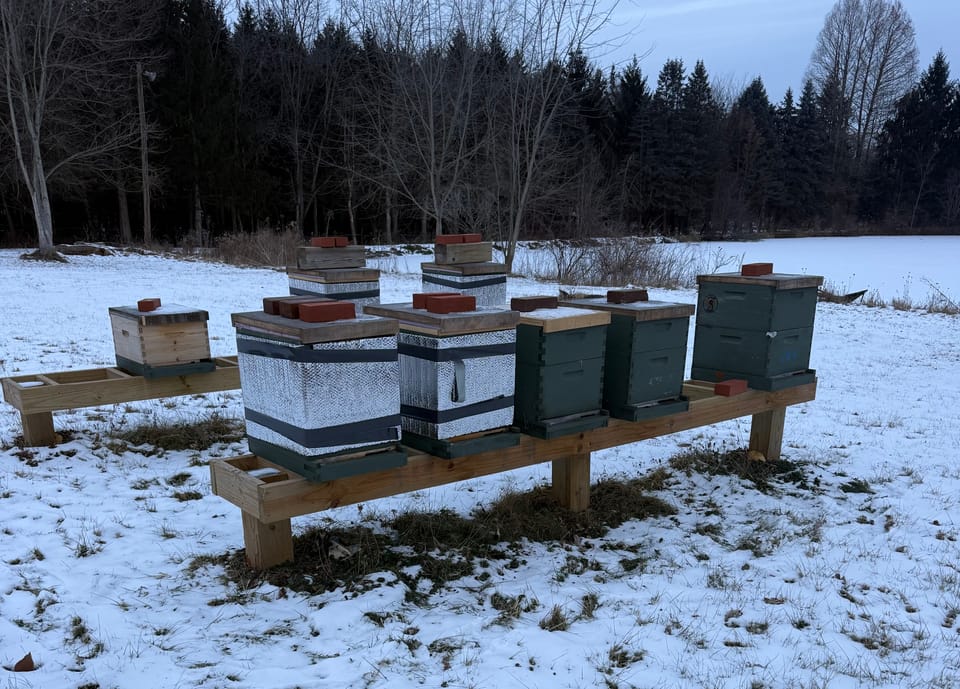
As I sit here on another brutally cold winter day, I finally have time to slow down and think. Beekeeping has a way of doing that in the off-season. I find myself reflecting on the past year — the wins, the mistakes, and everything in between.
Naturally, my mind drifts to the coming season and what I want to do differently. The 2025 season taught me some hard lessons, especially about growth. Not just growing the number of hives, but growing the right way. I’ve learned that successful growth starts with understanding how bees actually work best.
There’s so much noise out there about how to keep bees. Everyone has a system, a trick, or a shortcut. Looking back, I realize I should have focused more on the basics. Instead, I tried to do everything in one year — and ended up not accomplishing as much as I’d hoped.
In hindsight, I was set up to struggle from the start. This will only be my third year keeping bees, and I began with all brand-new equipment. Sure, it looked great. But what I didn’t understand then was how valuable drawn comb really is. Nothing beats it.
After my first season, I had a small honey harvest and some beautiful drawn comb. I remember thinking I could melt it down and make candles. After all, the bees would just make new wax next year… right?
Wrong.
Once you understand how much nectar bees have to consume just to produce wax, you realize that drawn comb is worth far more than any candle. That lesson really hits home when you follow it up with a low nectar flow year. The bees struggle just to build enough comb for the queen to lay eggs — forget about surplus honey.
Positive Focus
Not all of it was bad. I did learn a lot this season, and hopefully I became a better beekeeper because of it.
One of my favorite accomplishments was catching my first two swarms. The excitement was like waking up on Christmas morning. Walking up to a swarm trap and seeing a flurry of bees coming and going is something that’s hard to put into words. Some experiences can be described in detail, but nothing beats seeing something like that in person.
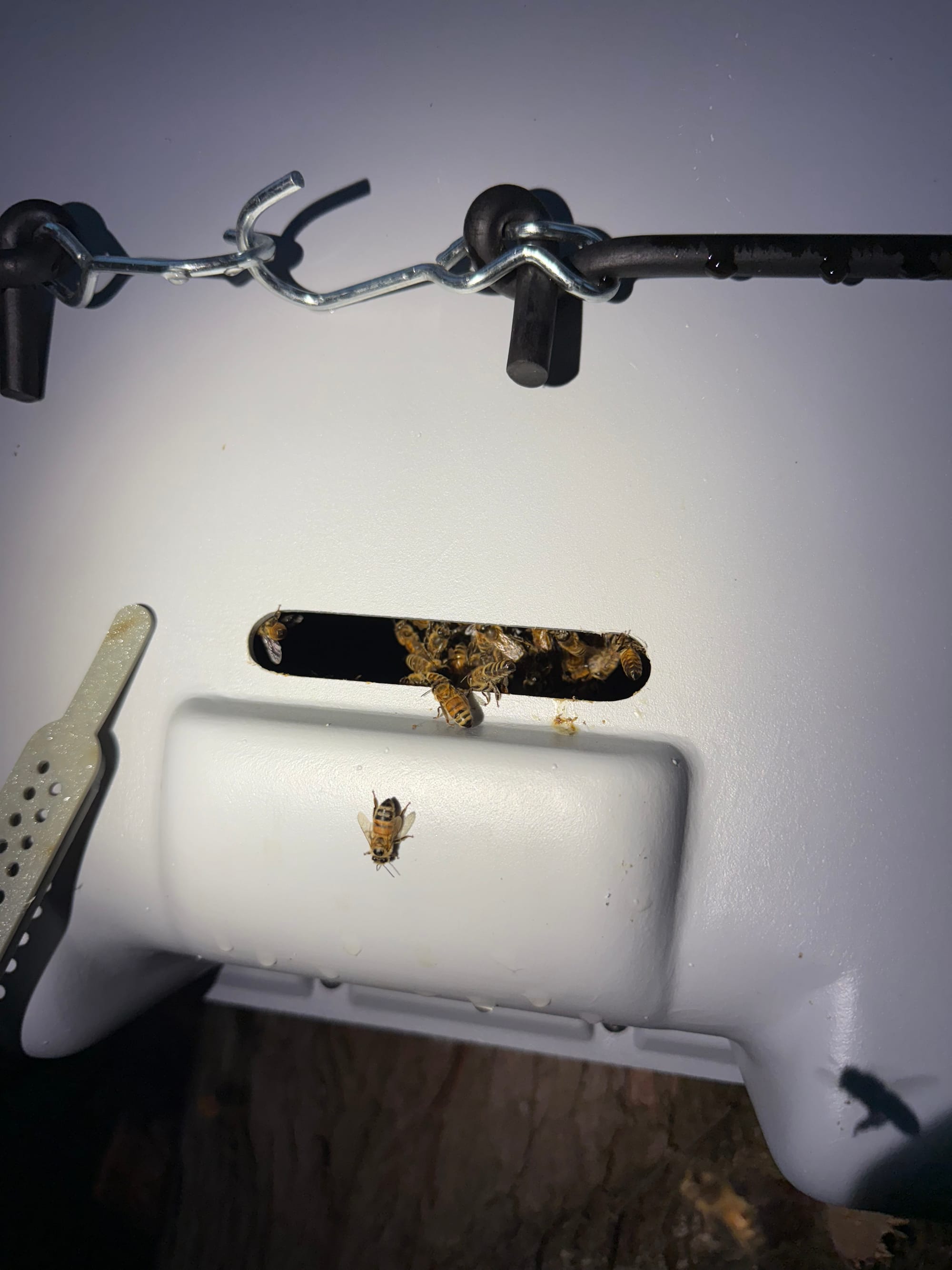
The first swarm I caught had to be around four pounds of bees. I had three-pound packages arrive just a few weeks earlier, and this swarm was definitely bigger than that. One of the most astonishing things — something you read about but aren’t fully prepared for — is how fast a swarm builds once you move them into a permanent hive. I put almost all new foundation in that hive, and before I knew it they had built comb and were bursting at the seams.
Then they swarmed again.
That pretty much set the tone for the rest of the summer.
My biggest goal last season was to get all of my foundation drawn out. I didn’t quite reach that goal, but I did make much more progress than I had before. If there’s one piece of advice I can give, it’s this: do not use a queen excluder when trying to draw comb.
I had this ignorant idea that I could have my cake and eat it too. I put foundation above a queen excluder, thinking the bees would draw it out without issue. That decision cost me dearly. My hives swarmed over and over again. I kept giving them new foundation, but it wasn’t being built fast enough — and then, boom, another swarm.
It wasn’t until August that I finally realized I might be the problem. As soon as I removed the queen excluder, they started building comb at nearly triple the speed. By then, it was too late. I had swarmed through the nectar flows and was left with less-than-ideal colonies.
Still, I’m choosing to focus on the positives. I now have more drawn comb than ever before. I know not to put queen excluders below large amounts of foundation. I have dead-outs that I can use for splits in the spring.
My goals for the coming season are simple: prevent swarming, try spring splits, and continue building my drawn comb collection. And, quietly, I’ll be hoping for plenty of honey to harvest.
“The honey-bee is not a solitary insect; she is a member of a community, and can only live and labor successfully as such.”
— Lorenzo Lorraine Langstroth
Member discussion